
Global Video Game Study
Insights on gaming through standardized surveys, international collaboration, and global data to inform prevention and treatment.

GlobalVIGS
An international gaming survey
- 60+ Institutions
- 80+ Researchers
- 55+ Countries
Mission Statement
Video gaming is a popular recreational activity worldwide, with over 2.7 billion people playing video games every year (Clement, 2025). However, there are many individual differences in gaming behavior, and for some people, gaming can become problematic (i.e., gaming addiction). As video gaming is a global activity, it is essential to examine cultural differences and similarities in video gaming. The Global Video Game Study (GlobalViGS) has four overarching aims: 1) to describe the gaming habits and behaviours of people who play video games worldwide; 2) to identify culturally invariant and culturally specific risk and protective factors of problematic gaming across cultures; 3) to examine how problematic gaming co-occurs with mental health symptoms and addiction; 4) to understand the treatment and recovery processes of problematic gaming. The study is unfunded and support is provided by internal funds from TMU and in-kind contributions from collaborators.

Understanding Gaming Across Cultures
The Global Video Games Study (GlobalViGS) is an international research collaboration dedicated to understanding video gaming behaviors across cultures. While gaming is enjoyable for most, for some individuals it can become problematic and negatively affect mental health, relationships, and daily functioning.
Because gaming is a global phenomenon, understanding cultural similarities and differences is essential. GlobalViGS brings together researchers from multiple countries to examine gaming behavior, problematic gaming, and recovery processes across diverse cultural contexts.
Study Goals
Describe
To describe gaming habits and behaviors of people who play video games worldwide
Identify
To identify shared and culture-specific risk and protective factors for problematic gaming
Examine
To examine how problematic gaming co-occurs with mental health symptoms and addiction
Understand
To understand treatment and recovery for problematic gaming
GlobalVIGS Team
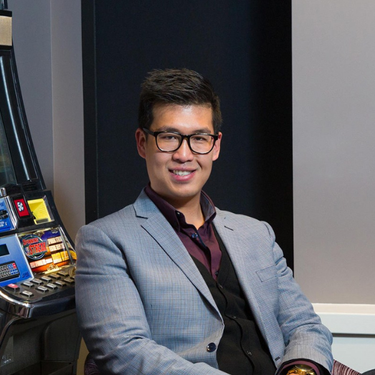
Principal investigator
Dr. Andrew (Hyounsoo) Kim
- ResearchGate
- andrewhs.kim@torontomu.ca
Dr. Andrew Kim is an Assistant Professor in the Department of Psychology at Toronto Metropolitan University and the Principal Investigator of the Addictions and Mental Health (ADMH) Lab. Dr. Kim holds a Canada Research Chair (Tier II) in Addictions and Mental Health Comorbidity. He completed his PhD in Clinical Psychology at the University of Calgary followed by a psychology residency in the Substance Use and Concurrent Disorders Program at The Royal Ottawa Mental Health Centre. His research focuses on understanding shared and unique risk factors underlying substance and behavioral addictions and their mental health comorbidities. Dr. Kim is committed to developing integrated, evidence-based treatments that support individuals experiencing co-occurring addictions and mental health difficulties.

Dr. Beáta Bőthe
Université de Montréal
Dr. Bőthe (she/her) is an assistant professor at the Department of Psychology at the University of Montreal (Canada), a researcher at the Centre de recherche interdisciplinaire sur les problèmes conjugaux et les agressions sexuelles (CRIPCAS), and the director of the Sexuality, Technology, and Addictions Research Laboratory (STAR Lab). She focuses on addictions, compulsive sexual behaviors, pornography use, and online behaviors. She has published more than 170 international research articles in leading scientific journals and 16 book chapters. She is an Associate Editor of the Journal of Behavioral Addictions and a member of the editorial boards of other top-tier journals (e.g., Journal of Sex Research, Archives of Sexual Behavior). Among others, she was the recipient of the International Society for the Study of Behavioral Addictions’ (ISSBA) Early Career Research Award (2023), the Association for Psychological Science’s (APS) Rising Star Award (2025), the Canadian Sex Research Forum’s (CSRF) Early Career Outstanding Contribution Award (2025), and Universal Scientific Education and Research Network’s (USERN) Prize (2025).

Dr. David Hodgins
University of Calgary
David C. Hodgins, Ph.D., R.Psych., FCAHS, FRSC, is a professor in the Program in Clinical Psychology in the Department of Psychology, University of Calgary and is director of the Addictive Behaviours Lab at the University of Calgary. Dr. Hodgins is also a research coordinator with the Alberta Gambling Research Institute. His research interests focus on various aspects of addictive behaviours including relapse and recovery from substance abuse and gambling disorders. Dr. Hodgins teaches in the clinical psychology program and has an active cadre of graduate students. He maintains a private practice in Calgary in addition to providing consultation to organizations internationally.

Dr. Zsolt Demetrovics
Flinders University
Zsolt Demetrovics is a Matthew Flinders Professor in Mental Health and Wellbeing at the College of Education, Psychology, and Social Work at Flinders University (Adelaide, Australia), where he also serves as Director of the Flinders University Institute for Mental Health and Wellbeing (FIMHWell) and Dean (Research) of the College. He also leads the Addiction Research Group at the ELTE Eötvös Loránd University (Budapest, Hungary). Zsolt has published over 600 papers and book chapters on the epidemiology, assessment, and psychological correlates of substance use behaviour and behavioural addictions, including gambling, video game use, internet addiction, hypersexual behaviour, exercise addiction, work addiction, and compulsive buying. He is president of the International Society for the Study of Behavioral Addictions and founding Editor-in-Chief of the Journal of Behavioral Addictions.
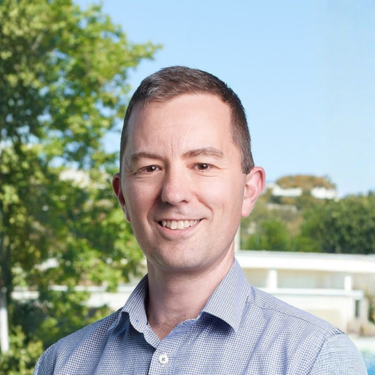
Dr. Daniel King
Flinders University

Dr. Andrea Czakó
University of Gibraltar
Andrea Czakó, PhD, is a researcher and the Head of the Centre of Excellence in Responsible Gaming at the University of Gibraltar and a member of the Addiction Research Group at ELTE Eötvös Loránd University, Budapest, Hungary. She completed her PhD in social psychology in 2017 at ELTE Eötvös Loránd University. Her research interest covers addictive behaviours, especially online gambling, gaming and other technology-related behaviours.

Dr. Daniel Spritzer
Universidade Federal do Rio Grande do Sul
Daniel Tornaim Spritzer, MD, PhD, is a psychiatrist and researcher specializing in behavioral addictions, with a focus on gaming disorder and problematic internet use. He earned his medical degree at the Federal University of Rio Grande do Sul (UFRGS), completed residency training in Psychiatry and in Child and Adolescent Psychiatry, and obtained an MSc and PhD in Psychiatry and Behavioral Sciences at UFRGS. He is the Coordinator of the Study Group on Technological Addictions (GEAT) and has been an expert member of the World Health Organization (WHO) work group on problematic digital gaming since 2015. He is also the author of the book Connected Children: How Conscious Use of Technology Can Become an Ally for Families and Schools.

Dr. Joel Billieux
University of Lausanne
Joël Billieux is associate professor of clinical psychology, psychopathology, and psychological assessment at the university of Lausanne, and Co-director of the Cognitive and Affective Regulation Lab (CARLA), Institute of Psychology (IP), University of Lausanne (UNIL). He is also an associate researcher at Center for Excessive Gambling (Lausanne University Hospitals). His main area of research regards the psychological factors (cognitive, affective, motivational, interpersonal) involved in the etiology of addictive behaviors (with a particular focus on self-regulation-related processes), and the conceptualization and diagnosis of behavioral addictions. He also conducts research focusing on the effect of emerging technologies on human behavior, and on the therapeutic use of tabletop role-playing games. Since 2014, he has been an expert in a World Health Organization (WHO) workgroup related to the public health implications of behavioral addictions associated with the excessive use of ICTs and is currently involved in the management of the WHO collaborating center “innovation and treatment of disorders due to substance use and addictive behaviors (WHO-CC-SWO-87) located at the addiction medicine service from the psychiatry department at Lausanne University Hospitals. He is a contributor of ICD-11 CDDR (Clinical descriptions and diagnostic requirements for ICD-11 mental, behavioural and neurodevelopmental disorders) section on “substance use disorder and addictive behaviors”. He published more than 390 research papers and holds editorial positions in various addiction and cyberpsychology journals (e.g., Journal of Behavioral Addictions, Addictive Behaviors, Computers in Human Behaviors).
- Australia (Daniel King, Zsolt Demetrovics)
- Austria (Dominik Batthyany, Alexandra Puhm, Julian Strizek)
- Bangladesh (Saiful Islam)
- Belgium (Olivier Desmedt)
- Bolivia (Guillermo Mendoza)
- Brazil (Daniel Spritzer)
- Canada (Beáta Bőthe, David Hodgins, Andrew Kim)
- Chile (Fernando Ponce, Gonzalo Zunino)
- China (Chung-Ying Lin, Anise Wu, Leon Xiao)
- Colombia (Martha Jimenez, William Avíla Jimenez)
- Congo (Achille Bapolisi)
- Croatia (Jana Kiralj Lackovic)
- Czechia (Lukas Blinka, Roman Gabrhelik, Katerina Lukavska)
- Dominican Republic (Jairo Espinal-Martínez, Luis Eduardo Garrido de los Santos)
- Ecuador (Silvia Lucia Lopez Alvarado)
- Egypt (Hussien Elkholy, Rahaf Mohamed, Nabila Raouf)
- Finland (Sari Castrén, Niko Männikkö, Terhi Mustonen)
- France (Céline Bonnaire, Laura Lambert)
- Germany (Hans-Jürgen Rumpf)
- Gibraltar (Andrea Czakó, Harshdeep Mangat)
- Hong Kong (Leon Xiao)
- Hungary (Orsolya Kiraly)
- India (Yatan Pal Singh Balhara, Sheikh Shoib, Harshdeep Mangat, Kaushik Pratima)
- Indonesia (Kristiana Siste Kurniasanti)
- Ireland (Florian Scheibein, Marie Claire Van Hout)
- Israel (Yaniv Efrati)
- Italy (Vittoria Barbati, Riccardo Cavallaro, Ornella Corazza, Tommaso B. Jannini)
- Japan (Hironobu Fujiwara, Mami Shibata, Risa Hirata)
- Kenya (Ronald Kipkirui Ngetich)
- Korea (Sang-Kyu Lee, Seung-Yup Lee, Kyeongwoo Park, Sun-Jin Jo)
- Lithuania (Julius Burkauskas, Vesta Steibliene)
- Macau (Anise Wu, Wenting Xu)
- Malaysia (Michele Anne, David Fernandez, Wan Ying Gan)
- New Zealand (Rita Csako, Daniel Shepherd)
- Nigeria (Larry Awo)
- North Macedonia (Biljana Gjoneska, Haris Sulejmani)
- Norway (Eilin K. Erevik, Mathilde Moldestad, Ståle Pallesen)
- Panama (Gabriel Quintero)
- Paraguay (Julio Torales)
- Peru (Jano Ramos-Diaz)
- Poland (Mateusz Gola, Ewelina Kowalewska, Karol Lewczuk)
- Portugal (Joana Carvalho, Samuel Silva)
- Romania (Roxana Cardoș, Ion Milea)
- Rwanda (Patana Mulisanze)
- Singapore (Choo Hyekyung, Esther Tay, Soo Jung Hong)
- Slovakia (Marta Dobrowolska Kulanová, Ondrej Kalina, Olga Orosova)
- South Africa (Christine Lochner, Dan Stein)
- Spain (Jesús Castro-Calvo, Fernando Fernandez-Aranda, Susana Jiménez-Murcia)
- Sweden (Per Bore, Emma Claesdotter-Knutsson)
- Switzerland (Joel Billieux, Loïs Fournier, Yasser Khazaal)
- Taiwan (Chung-Ying Lin)
- Turkey (Süreyyanur Kitapçıoğlu)
- United Kingdom (Philip Newall)
- United States (Joshua Grubbs, Shane W. Kraus, Jennifer Park, Marc Potenza)
- Zimbabwe (Gwatirera Javangwe)
Principal investigator
Dr. Andrew (Hyounsoo) Kim
- ResearchGate
- andrewhs.kim@torontomu.ca
Dr. Andrew Kim is an Assistant Professor in the Department of Psychology at Toronto Metropolitan University and the Principal Investigator of the Addictions and Mental Health (ADMH) Lab. Dr. Kim holds a Canada Research Chair (Tier II) in Addictions and Mental Health Comorbidity. He completed his PhD in Clinical Psychology at the University of Calgary followed by a psychology residency in the Substance Use and Concurrent Disorders Program at The Royal Ottawa Mental Health Centre. His research focuses on understanding shared and unique risk factors underlying substance and behavioral addictions and their mental health comorbidities. Dr. Kim is committed to developing integrated, evidence-based treatments that support individuals experiencing co-occurring addictions and mental health difficulties.

- Australia (Daniel King, Zsolt Demetrovics)
- Austria (Dominik Batthyany, Alexandra Puhm, Julian Strizek)
- Bangladesh (Saiful Islam)
- Belgium (Olivier Desmedt)
- Bolivia (Guillermo Mendoza)
- Brazil (Daniel Spritzer)
- Canada (Beáta Bőthe, David Hodgins, Andrew Kim)
- Chile (Fernando Ponce, Gonzalo Zunino)
- China (Chung-Ying Lin, Anise Wu, Leon Xiao)
- Colombia (Martha Jimenez, William Avíla Jimenez)
- Congo (Achille Bapolisi)
- Croatia (Jana Kiralj Lackovic)
- Czechia (Lukas Blinka, Roman Gabrhelik, Katerina Lukavska)
- Dominican Republic (Jairo Espinal-Martínez, Luis Eduardo Garrido de los Santos)
- Ecuador (Silvia Lucia Lopez Alvarado)
- Egypt (Hussien Elkholy, Rahaf Mohamed, Nabila Raouf)
- Finland (Sari Castrén, Niko Männikkö, Terhi Mustonen)
- France (Céline Bonnaire, Laura Lambert)
- Germany (Hans-Jürgen Rumpf)
- Gibraltar (Andrea Czakó, Harshdeep Mangat)
- Hong Kong (Leon Xiao)
- Hungary (Orsolya Kiraly)
- India (Yatan Pal Singh Balhara, Sheikh Shoib, Harshdeep Mangat, Kaushik Pratima)
- Indonesia (Kristiana Siste Kurniasanti)
- Ireland (Florian Scheibein, Marie Claire Van Hout)
- Israel (Yaniv Efrati)
- Italy (Vittoria Barbati, Riccardo Cavallaro, Ornella Corazza, Tommaso B. Jannini)
- Japan (Hironobu Fujiwara, Mami Shibata, Risa Hirata)
- Kenya (Ronald Kipkirui Ngetich)
- Korea (Sang-Kyu Lee, Seung-Yup Lee, Kyeongwoo Park, Sun-Jin Jo)
- Lithuania (Julius Burkauskas, Vesta Steibliene)
- Macau (Anise Wu)
- Malaysia (Michele Anne, David Fernandez, Wan Ying Gan)
- New Zealand (Rita Csako, Daniel Shepherd)
- Nigeria (Larry Awo)
- North Macedonia (Biljana Gjoneska, Haris Sulejmani)
- Norway (Eilin K. Erevik, Mathilde Moldestad, Ståle Pallesen)
- Panama (Gabriel Quintero)
- Paraguay (Julio Torales)
- Peru (Jano Ramos-Diaz)
- Poland (Mateusz Gola, Ewelina Kowalewska, Karol Lewczuk)
- Portugal (Joana Carvalho, Samuel Silva)
- Romania (Roxana Cardoș, Ion Milea)
- Rwanda (Patana Mulisanze)
- Singapore (Choo Hyekyung, Esther Tay, Soo Jung Hong)
- Slovakia (Marta Dobrowolska Kulanová, Ondrej Kalina, Olga Orosova)
- South Africa (Christine Lochner, Dan Stein)
- Spain (Jesús Castro-Calvo, Fernando Fernandez-Aranda, Susana Jiménez-Murcia)
- Sweden (Per Bore, Emma Claesdotter-Knutsson)
- Switzerland (Joel Billieux, Loïs Fournier, Yasser Khazaal)
- Taiwan (Chung-Ying Lin)
- Turkey (Süreyyanur Kitapçıoğlu)
- United Kingdom (Philip Newall)
- United States (Joshua Grubbs, Shane W. Kraus, Jennifer Park, Marc Potenza)
- Zimbabwe (Gwatirera Javangwe)
Frequently Asked Questions
What is the purpose of this study?
This study aims to understand how people around the world engage with video games and how gaming relates to wellbeing, mental health, and recovery across different cultures.
Who is conducting the research?
The study is led by university-based researchers at Toronto Metropolitan University in collaboration with researchers from universities and research institutes across multiple countries.
Why is this study international?
Video gaming is a global activity, but most research has focused on only a few regions. This study brings together data from many countries to better understand cultural similarities and differences in gaming experiences.
How will the results be used?
The findings will be used in peer-reviewed scientific publications and may help inform prevention strategies, public policy, and treatment approaches related to problematic gaming worldwide.
Is participation anonymous?
Yes. The survey is designed to be completed anonymously, meaning that you will not be asked to enter any identifying information, such as your name or email address. When presenting the study results, only analyses at the group level are presented.
Who can take part in this research?
We were planning for eligible participants to be adults who have played video games in the past year.
Where can I learn more or ask questions?
If you have questions about the study, you can contact the research team at: globalvigs@torontomu.ca

Addictions and Mental Health Lab
We study the causes and impacts of substance and behavioral addictions to improve treatment and support for those affected.
Pages
105 Bond St Room 271, Toronto, ON M5B 2K3
- Email: admhlab@torontomu.ca
- Phone: 416-979-5000 ext. 552184
- Room: SBB101 and SBB106